Stone Guitars — hand-built acoustic guitars by luthier Devon Stone in Birmingham, Alabama. Every instrument begins with an idea and ends only when its voice is found.

I build guitars the way an artist approaches a painting. Each instrument begins with an idea, then takes shape through the wood, the process, and the time required to bring out its voice.

These are not custom orders or stocked instruments. They are completed when the work is ready.

Invocations are welcome
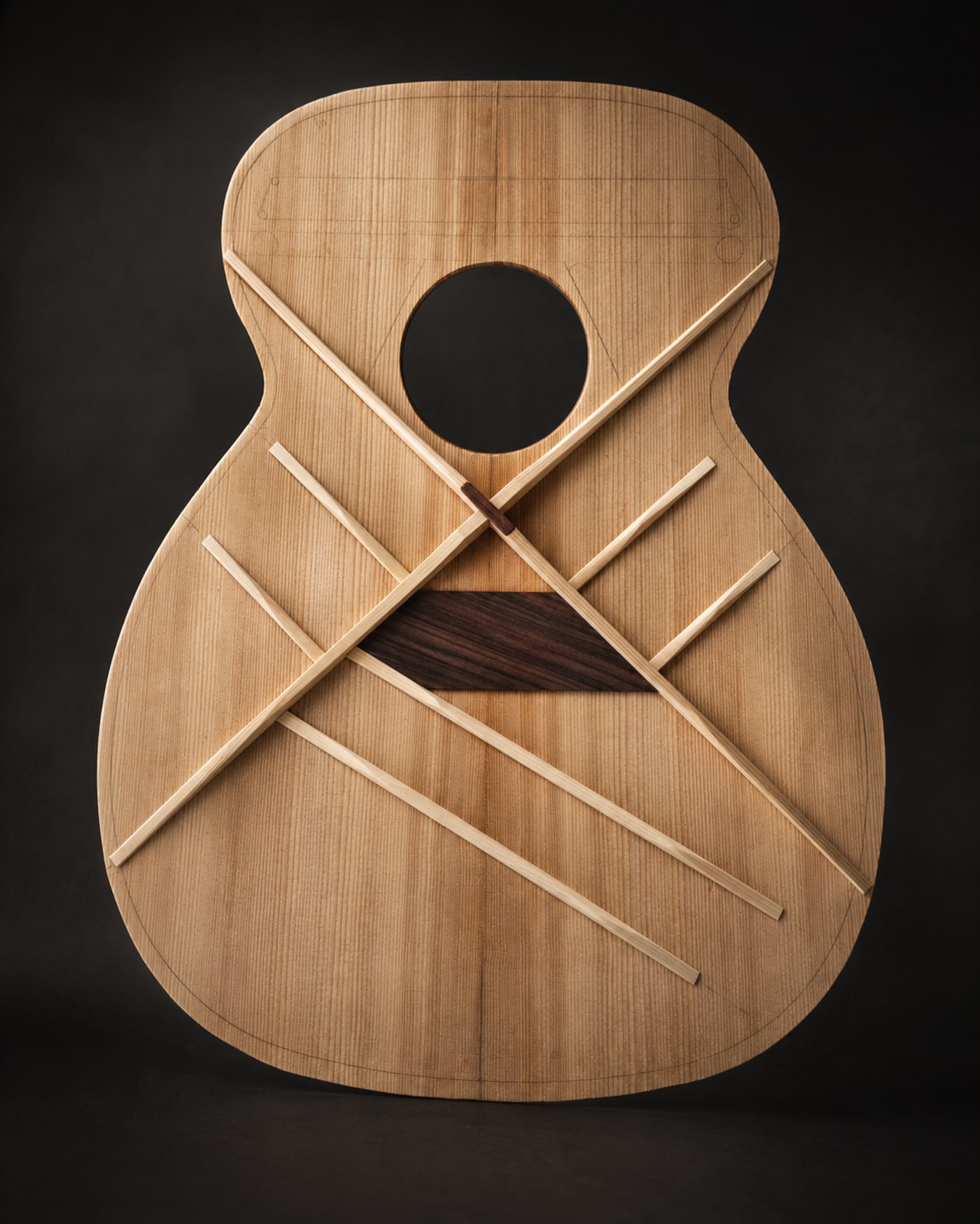
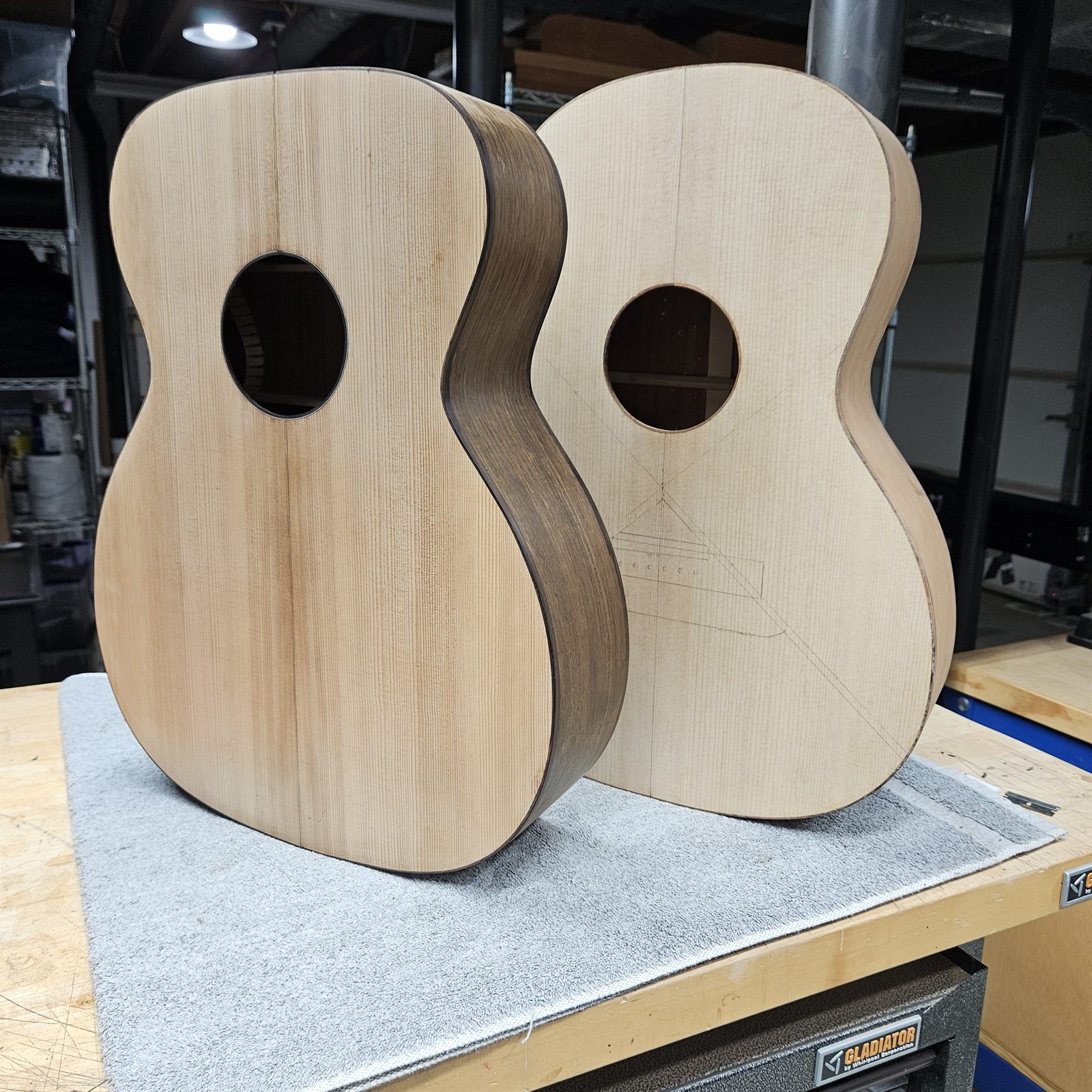
Manifestation III in incubation at Stone Guitars — an Adirondack spruce top with hand-shaped X-bracing laid out before gluing, on the workbench of luthier Devon Stone in Birmingham, Alabama.

Manifestation III is currently incubating.

Each instrument is a manifestation of one carried idea.

A manifestation is not a model. It is the place where a long-carried process finally arrives at form. The works below are listed in the order they were voiced.

Manifestation I

000-style · 12-fret · All mahogany · Voiced 2026
Voiced
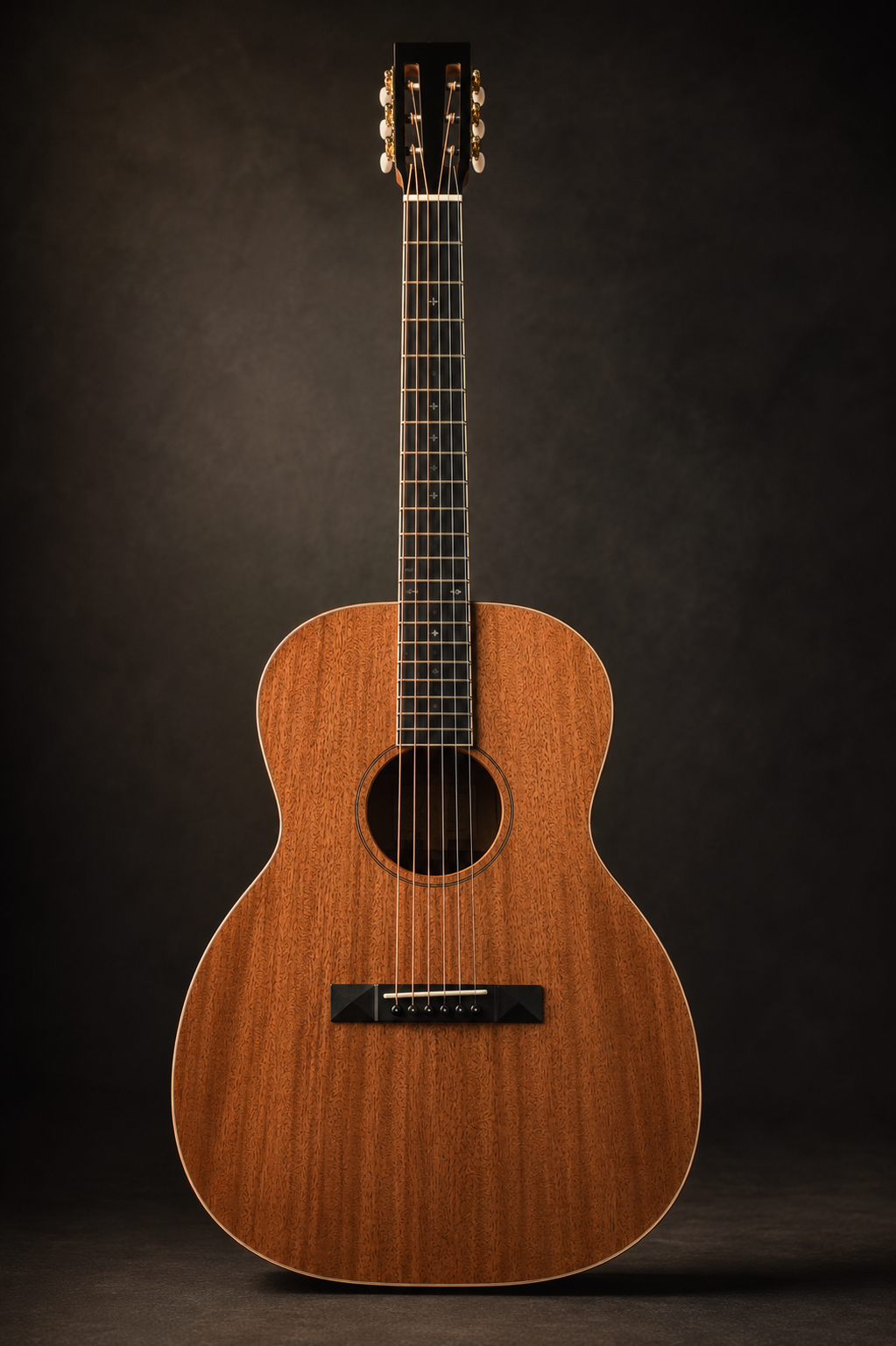
Manifestation I — an all-mahogany 000-style 12-fret acoustic guitar with slotted headstock, hand-built by luthier Devon Stone of Stone Guitars in Birmingham, Alabama, photographed full-length under warm studio light.
Manifestation I Mahogany · Ebony · Curly maple

This guitar is the first completed manifestation of a process I had been carrying for years.

Not a commission. Not a customer specification. Not an attempt to recreate something already perfected by someone else. This instrument became the place where everything I had studied, built, felt, failed at, refined, and carried forward finally had a physical form.

It is a 000-style, vintage-inspired 12-fret guitar with a slotted headstock, built from mahogany in its natural color. No stain. No artificial aging. No attempt to make the wood become something other than what it already was. The dark walnut pore fill was chosen only to deepen the surface and bring out the quiet authority of the mahogany.

The body follows the old Martin 000 footprint, with one important adjustment: the depth is reduced by one quarter inch. That small change was intentional. I wanted to slightly tighten the voice, bring more focus into the midrange, and preserve the warmth and bass response that makes a 12-fret 000 feel alive against the body.

The aesthetic is restrained on purpose.

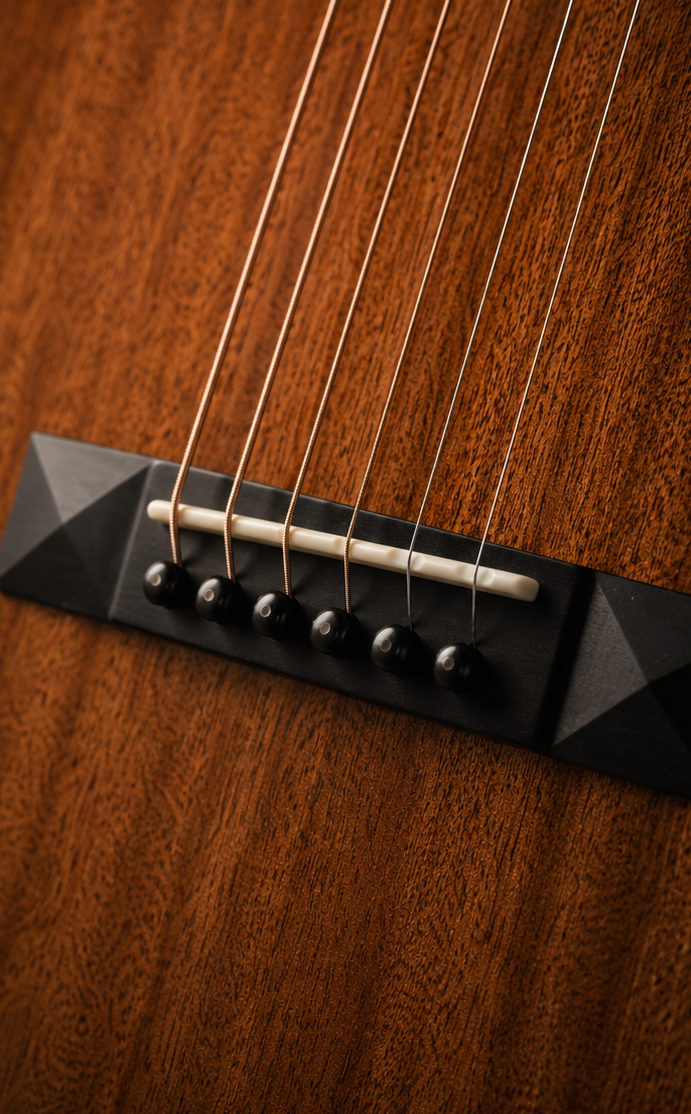
Curly maple binding frames the mahogany without overpowering it. Ebony was used for the bridge, fingerboard, and headstock veneer — some of the deepest black ebony I have personally handled. The rosette is intentionally simple. I do not believe a rosette should compete with the guitar. It should feel like a quiet mark, something you notice because it belongs there, not because it is asking for attention.

Inside, the guitar is built with old-growth, torrefied, tight-grain bracewood and forward-shifted X bracing. A curly maple bridge plate sits beneath the top, chosen both for its beauty and its contribution to the energy transfer of the instrument. The guitar was built with traditional hide glue construction, basswood kerfing, a one-piece neck, and a bolt-through mortise and tenon neck joint.

There are no electronics. No pickup. No strap button holes. No pickguard.

Nothing was added that did not need to be there.

This guitar was voiced through a process I am still learning, using resonant frequency analysis alongside the more human parts of building: touch, flex, response, patience, and listening. The result is an unusually open instrument. It is highly resonant, immediate, and alive under the hand. For a fingerstyle player, especially tuned down a half step, it has a quality that is difficult to reduce to specification.

It does not feel like it is waiting to be forced.

It feels like it is already speaking.
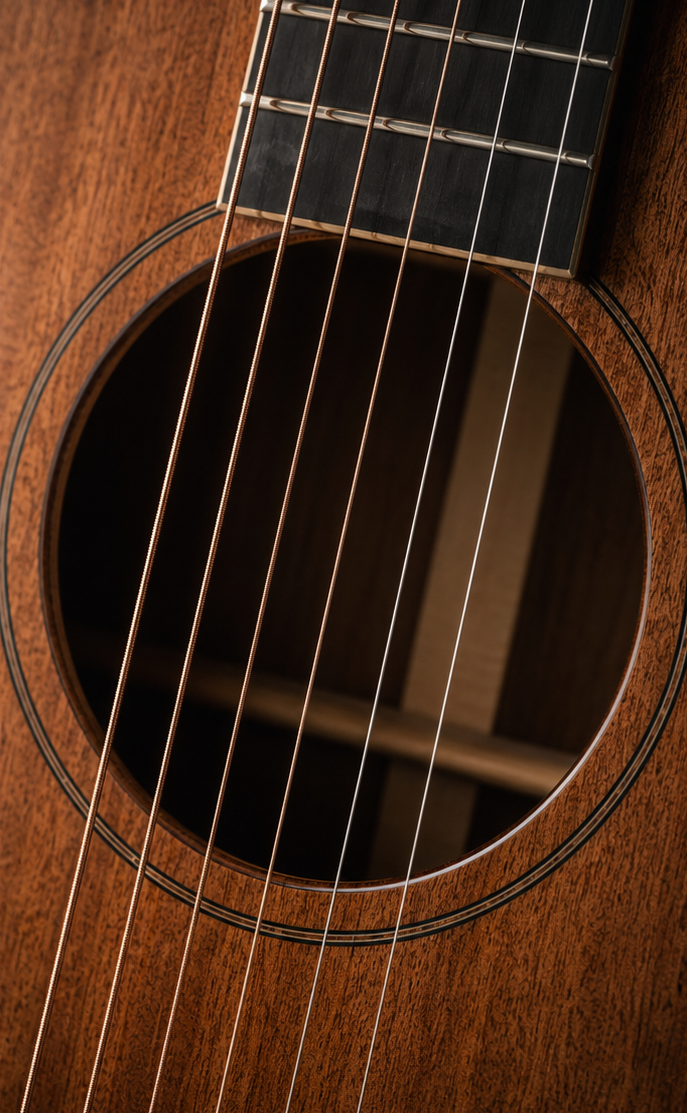
Soundhole and minimal rosette of Manifestation I, a Stone Guitars hand-built mahogany acoustic by luthier Devon Stone.
The rosette — a quiet mark, not a contest.
Slotted ebony bridge of Manifestation I, the 000-style 12-fret acoustic guitar built by Devon Stone of Stone Guitars.
The bridge — slotted ebony, set with hide glue.

Manifestation I was built as an original expression rather than a commissioned instrument.

It represents the transfer of many different disciplines into one object: woodworking, design, engineering, process, restraint, failure, repair, sound, and feeling. The goal was not simply to build a guitar that looked traditional. The goal was to create something personal within a traditional form.

The 12-fret 000 platform gave me the foundation. From there, every choice became a question of balance. How much should be shown? How much should be hidden? How much decoration is enough? How much mass can be removed before the instrument loses its center? How much resonance is too much?

This guitar is the answer I arrived at for this first work.

Manifestation I is open, warm, and deeply responsive.

The all-mahogany construction gives the guitar a dry, woody character with strong fundamental presence. The slightly shallower body adds focus and clarity through the midrange while still allowing the 12-fret body to produce a full and satisfying bass response.

It is not a stiff guitar. It does not need to be driven hard to wake up.

The top responds quickly, with a resonant quality that especially rewards fingerstyle playing. In standard pitch, it is balanced and articulate. Tuned down a half step, the guitar becomes looser, wider, and more atmospheric, with a voice that feels larger than its dimensions suggest.

It is an intimate instrument, but not a small-sounding one.
Through the rites, manifestations emerge.

Fragments from the bench: bracing, voicing, binding, finish, and the quiet stages where an instrument changes form.

I came to lutherie at a point in my life where a lot of separate threads started to feel like one thing.

Woodworking, music, design, patience, problem-solving, obsession with small details, the need to make something honest with my hands. For a long time, those things felt disconnected. Then guitar building gave them a place to land.

It did not feel like picking up a hobby. It felt more like recognizing a direction I had already been moving toward.

Building guitars has become part of how I think. It slows me down. It makes me pay attention. Every piece of wood has its own limits, strengths, flaws, and possibilities. You do not force it into being something it is not. You listen, adjust, and work with what is there until the instrument starts to become itself.

That process has changed me.

I am drawn to guitars because they are both deeply practical and strangely personal. They are tools, but they are not just tools. They hold memory. They respond to touch. They carry the voice of the player, the choices of the builder, and something from the material itself.

My goal is not to build instruments that feel expensive for the sake of being expensive. I want to build guitars that feel considered. Guitars with weight, restraint, warmth, and purpose. Instruments that invite reflection, not because they demand attention, but because they reward it.

If one of my guitars finds its way into someone's life, I hope it becomes more than an object they own. I hope it becomes something they return to. Something that changes the room a little when it is played. Something that makes the player hear differently, think differently, or feel more connected to what they are trying to say.

That is what keeps me building.

Not just the guitar itself, but the quiet possibility that a handmade instrument can carry something forward, from the builder, to the player, to everyone who hears it.

— Devon Stone

Invocation begins the conversation.

These instruments are not built to fill orders. They emerge through incubation, shaped by instinct, material, time, and the life already moving through the wood.

If a manifestation speaks to you, or if you simply want to begin a conversation around an instrument that already exists, you are welcome to write. Share your story, your relationship with music, what you heard, what you felt, or why the instrument found your attention.

For those who feel a deeper pull toward ownership, there is a more formal path of consideration. Not every inquiry becomes an invitation, and not every instrument is meant to leave. But when story, instrument, and player recognize one another, the next step becomes clear.